
- You are here:
- Home

- Services
- Waste Collection/Management
- Recycling Program
Recycling Program
Recycling in Nova Scotia: Understanding the New EPR Program
As of December 1, 2025, Extended Producer Responsibility (EPR) has launched in Nova Scotia.
EPR is a new recycling approach now being introduced province‑wide. Under EPR, the companies that produce, import or sell packaging and paper products become fully responsible — financially and operationally — for collecting, recycling, and processing those materials, instead of municipalities.
This policy is part of a broader shift in Nova Scotia to reduce waste, encourage better product design and packaging, and build a more sustainable, circular economy.
What Stays the Same
- Your blue-bag curbside recycling collection continues as usual.
- Collection days and your current provider remain unchanged.
- You will still sort recyclables into your blue bags and place them at the curb.
What’s Changing
- Starting December 1, 2025, more items can go in your blue bag, including:
- Disposable paper cups and bowls
- Ice cream cartons, frozen food boxes
- Small plastic bottles, pumps, tubes, and pails
- Candy and gum containers, garden pots, and seedling trays
- For more information on what can be recycled, here is a list of materials, visit https://www.circularmaterials.ca/resident-provinces/nova-scotia/.
Materials no longer accepted curbside include books, pots & pans, and some flexible plastics. These now need to be taken to designated depots.
Beverage Containers
Beverage containers can be returned for a refund to the Enviro-Depot at 400 Oak Park Road, NS
Electronics
Computers, printers, monitors, computer components and televisions are banned from landfills. Your electronics can be dropped off at the Enviro Depot at 400 Oak Park Road for disposal.
Carton Recycling
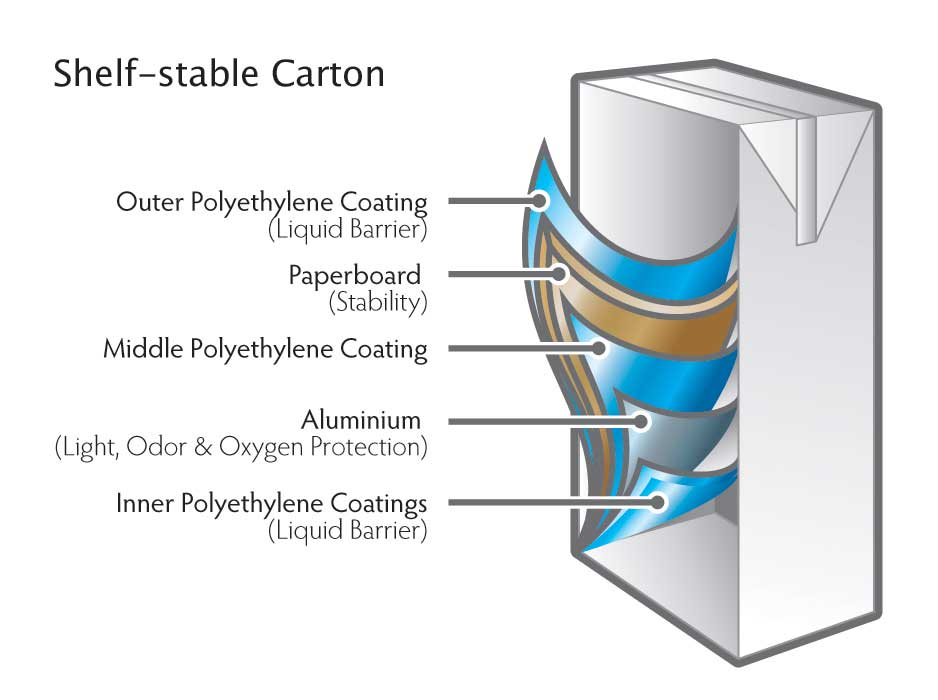
Cartons are a type of packaging for food and beverage products you can purchase at the store. They are easy to recognize and are available in two types—shelf-stable (also known as an aseptic carton) and refrigerated (also known as a gable top carton). Cartons are mainly made from paper in the form of paperboard, as well as thin layers of polyethylene (plastic). The shelf stable ones have also a thin layer of aluminum.
Shelf-stable (aseptic) cartons
Shelf-stable cartons contain on average 74% paper, 22% polyethylene and 4% aluminum. Products in shelf-stable cartons include items such as juice, milk, soy and grain milk, soup and broth and wine.
Refrigerated (gable top) cartons
Refrigerated cartons contain about 80% paper and 20% polyethylene. Products in refrigerated cartons include items such as milk, juice, cream, egg substitutes, soy and grain milk.
